Weather Alert in Illinois
Flood Warning issued March 9 at 7:55PM CDT until March 15 at 2:12PM CDT by NWS St Louis MO
AREAS AFFECTED: Clinton, IL
DESCRIPTION: ...The Flood Warning continues for the following rivers in Illinois...Missouri... Kaskaskia River at Carlyle. Big River at Byrnesville. ...The Flood Warning is extended for the following rivers in Missouri... Meramec River at Valley Park. Meramec River near Eureka. ...The Flood Warning is cancelled for the following rivers in Missouri... Meramec River near Sullivan. River forecasts are based on observed precipitation and forecast precipitation for the next 48 hours. * WHAT...Minor flooding is occurring and minor flooding is forecast. * WHERE...Kaskaskia River at Carlyle. * WHEN...Until Sunday afternoon. * IMPACTS...At 16.5 feet, Near this height, downstream agricultural fields begin flooding. * ADDITIONAL DETAILS... - At 7:30 PM CDT Monday the stage was 16.8 feet. - Recent Activity...The maximum river stage in the 24 hours ending at 7:30 PM CDT Monday was 16.9 feet. - Forecast...The river is expected to fall below flood stage Saturday morning and continue falling to 12.8 feet Monday, March 16. - Flood stage is 16.5 feet.
INSTRUCTION: Turn around, don't drown when encountering flooded roads. Most flood deaths occur in vehicles. Motorists should not attempt to drive around barricades or drive cars through flooded areas. Be especially cautious at night when it is harder to recognize the dangers of flooding. Rainfall heavier than forecast could cause river levels to rise even higher than predicted. The National Weather Service will monitor this developing situation and issue follow up statements as conditions change. This product, along with additional weather and stream information, is available at https://water.noaa.gov/wfo/lsx
Want more detail? Get the Complete 7 Day and Night Detailed Forecast!
Current U.S. National Radar--Current
The Current National Weather Radar is shown below with a UTC Time (subtract 5 hours from UTC to get Eastern Time).

National Weather Forecast--Current
The Current National Weather Forecast and National Weather Map are shown below.

National Weather Forecast for Tomorrow
Tomorrow National Weather Forecast and Tomorrow National Weather Map are show below.

North America Water Vapor (Moisture)
This map shows recent moisture content over North America. Bright and colored areas show high moisture (ie, clouds); brown indicates very little moisture present; black indicates no moisture.

Weather Topic: What are Contrails?
Home - Education - Cloud Types - Contrails
 Next Topic: Cumulonimbus Clouds
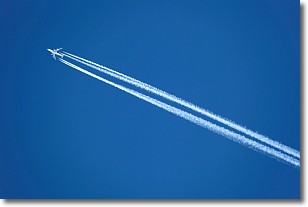
A contrail is an artificial cloud, created by the passing of an
aircraft.
Contrails form because water vapor in the exhaust of aircraft engines is suspended
in the air under certain temperatures and humidity conditions. These contrails
are called exhaust contrails.
Another type of contrail can form due to a temporary reduction in air pressure
moving over the plane's surface, causing condensation.
These are called aerodynamic contrails.
When you can see your breath on a cold day, it is also because of condensation.
The reason contrails last longer than the condensation from your breath is
because the water in contrails freezes into ice particles.
Next Topic: Cumulonimbus Clouds
Weather Topic: What are Cumulus Clouds?
Home - Education - Cloud Types - Cumulus Clouds
 Next Topic: Drizzle
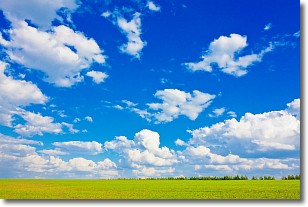
Cumulus clouds are fluffy and textured with rounded tops, and
may have flat bottoms. The border of a cumulus cloud
is clearly defined, and can have the appearance of cotton or cauliflower.
Cumulus clouds form at low altitudes (rarely above 2 km) but can grow very tall,
becoming cumulus congestus and possibly the even taller cumulonimbus clouds.
When cumulus clouds become taller, they have a greater chance of producing precipitation.
Next Topic: Drizzle
Current conditions powered by WeatherAPI.com