Weather Alert in Oklahoma
Severe Thunderstorm Watch issued April 3 at 2:37PM CDT until April 3 at 10:00PM CDT by NWS Norman OK
AREAS AFFECTED: Blaine, OK; Caddo, OK; Canadian, OK; Carter, OK; Cleveland, OK; Comanche, OK; Cotton, OK; Custer, OK; Garfield, OK; Garvin, OK; Grady, OK; Grant, OK; Hughes, OK; Jackson, OK; Jefferson, OK; Kay, OK; Kingfisher, OK; Kiowa, OK; Lincoln, OK; Logan, OK; Love, OK; McClain, OK; Murray, OK; Noble, OK; Oklahoma, OK; Payne, OK; Pontotoc, OK; Pottawatomie, OK; Seminole, OK; Stephens, OK; Tillman, OK; Washita, OK; Archer, TX; Baylor, TX; Clay, TX; Foard, TX; Hardeman, TX; Knox, TX; Wichita, TX; Wilbarger, TX
DESCRIPTION: THE NATIONAL WEATHER SERVICE HAS ISSUED SEVERE THUNDERSTORM WATCH 93 IN EFFECT UNTIL 10 PM CDT THIS EVENING FOR THE FOLLOWING AREAS IN OKLAHOMA THIS WATCH INCLUDES 32 COUNTIES IN CENTRAL OKLAHOMA CANADIAN CLEVELAND GRADY KINGFISHER LINCOLN LOGAN MCCLAIN OKLAHOMA PAYNE POTTAWATOMIE IN EAST CENTRAL OKLAHOMA PONTOTOC SEMINOLE IN NORTHERN OKLAHOMA GARFIELD GRANT KAY NOBLE IN NORTHWEST OKLAHOMA BLAINE IN SOUTHEAST OKLAHOMA HUGHES IN SOUTHERN OKLAHOMA CARTER GARVIN JEFFERSON LOVE MURRAY STEPHENS IN SOUTHWEST OKLAHOMA CADDO COMANCHE COTTON JACKSON KIOWA TILLMAN IN WESTERN OKLAHOMA CUSTER WASHITA IN TEXAS THIS WATCH INCLUDES 8 COUNTIES IN NORTHERN TEXAS ARCHER BAYLOR CLAY FOARD HARDEMAN KNOX WICHITA WILBARGER THIS INCLUDES THE CITIES OF ADA, ALTUS, ANADARKO, ARCHER CITY, ARDMORE, BLACKWELL, BLANCHARD, BURNS FLAT, CHANDLER, CHICKASHA, CLINTON, CONCHO, CORDELL, CROWELL, DAVENPORT, DAVIS, DUNCAN, EL RENO, ENID, FREDERICK, GEARY, GUTHRIE, HENNESSEY, HENRIETTA, HINTON, HOBART, HOLDENVILLE, HOLLIDAY, KINGFISHER, KNOX CITY, LAKESIDE CITY, LAMONT, LAWTON, LINDSAY, MARIETTA, MEDFORD, MEEKER, MOORE, MUNDAY, MUSTANG, NEWCASTLE, NORMAN, OKARCHE, OKEENE, OKLAHOMA CITY, PAULS VALLEY, PERRY, PONCA CITY, POND CREEK, PRAGUE, PURCELL, QUANAH, RINGLING, RYAN, SCOTLAND, SEMINOLE, SENTINEL, SEYMOUR, SHAWNEE, SHEPPARD AFB, SNYDER, STILLWATER, STROUD, SULPHUR, TEMPLE, THACKERVILLE, TUTTLE, VERNON, WAKITA, WALTERS, WATONGA, WAURIKA, WEATHERFORD, WELLSTON, WETUMKA, WEWOKA, WICHITA FALLS, WYNNEWOOD, AND YUKON.
INSTRUCTION: N/A
Want more detail? Get the Complete 7 Day and Night Detailed Forecast!
Current U.S. National Radar--Current
The Current National Weather Radar is shown below with a UTC Time (subtract 5 hours from UTC to get Eastern Time).

National Weather Forecast--Current
The Current National Weather Forecast and National Weather Map are shown below.

National Weather Forecast for Tomorrow
Tomorrow National Weather Forecast and Tomorrow National Weather Map are show below.

North America Water Vapor (Moisture)
This map shows recent moisture content over North America. Bright and colored areas show high moisture (ie, clouds); brown indicates very little moisture present; black indicates no moisture.

Weather Topic: What is Precipitation?
Home - Education - Precipitation - Precipitation
 Next Topic: Rain
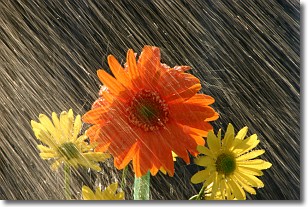
Precipitation can refer to many different forms of water that
may fall from clouds. Precipitation occurs after a cloud has become saturated to
the point where its water particles are more dense than the air below the cloud.
In most cases, precipitation will reach the ground, but it is not uncommon for
precipitation to evaporate before it reaches the earth's surface.
When precipitation evaporates before it contacts the ground it is called Virga.
Graupel, hail, sleet, rain, drizzle, and snow are forms of precipitation, but fog
and mist are not considered precipitation because the water vapor which
constitutes them isn't dense enough to fall to the ground.
Next Topic: Rain
Weather Topic: What are Shelf Clouds?
Home - Education - Cloud Types - Shelf Clouds
 Next Topic: Sleet
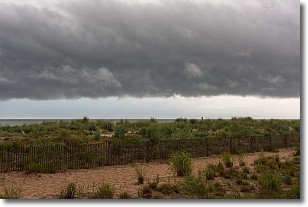
A shelf cloud is similar to a wall cloud, but forms at the front
of a storm cloud, instead of at the rear, where wall clouds form.
A shelf cloud is caused by a series of events set into motion by the advancing
storm; first, cool air settles along the ground where precipitation has just fallen.
As the cool air is brought in, the warmer air is displaced, and rises above it,
because it is less dense. When the warmer air reaches the bottom of the storm cloud,
it begins to cool again, and the resulting condensation is a visible shelf cloud.
Next Topic: Sleet
Current conditions powered by WeatherAPI.com